
Read Our Article
How to Use Cassia Gum Powder in Homemade Desserts and SaucesCassia Gum Powder in Germany: Food Safety Standards, E427 Compliance and Personal Care Demand
AI Summary
Germany is one of the largest cassia gum powder markets in Europe, driven by strict food safety standards, E427 regulatory approval and rising demand in personal care formulations. German manufacturers favor certified, well documented cassia gum powder from established exporters such as Avlast Hydrocolloids, particularly for clean label food, pet food and cosmetic applications.
Germany’s food and personal care industries are known for rigorous quality expectations and detailed regulatory compliance. For a natural hydrocolloid like cassia gum powder, that combination has created steady, long term demand rather than short term spikes.
Why Germany Is a Key Market for Cassia Gum Powder
German food processors, pet food manufacturers and cosmetic formulators consistently look for natural, plant based thickeners that meet European Union regulations. Cassia gum powder fits this need well, offering reliable viscosity and gelling support while carrying a clean label profile that appeals to German consumers.
Industry data shows steady, sustained growth for cassia gum powder in Germany, supported by mature food safety infrastructure and established ingredient regulations. This makes Germany a stable, long term market rather than a fast moving one, which is exactly the kind of demand that rewards suppliers who can maintain consistent quality year after year.
Germany’s position as the largest economy in the European Union also means that trends set by German manufacturers often influence buying behavior in neighboring markets, making it a useful benchmark for cassia gum powder demand across the wider region.
Call Now for Instant Assistance!
 Call Now
Understanding E427 Approval and EU Food Additive Regulation
Cassia gum is approved for use as a food additive across the European Union under the designation E427. This approval covers applications in dairy products, meat products, bakery items and pet food, provided the ingredient meets the required purity criteria set out under EU food law.
German buyers typically request full documentation confirming E427 compliance, including specification sheets, purity data and traceability records, before onboarding a new cassia gum supplier. This level of documentation is not optional in the German market, since retailers and food safety auditors routinely request evidence of ingredient compliance during supply chain reviews.
Manufacturers exporting cassia gum powder to Germany should be prepared to provide a full technical dossier rather than a brief specification sheet, since German buyers generally conduct a more thorough supplier qualification process compared to some other European markets.
EU Regulatory Snapshot for Cassia Gum Powder
| Parameter | Typical Acceptable Range | What It Indicates |
|---|---|---|
| Moisture content | Below 12 percent | Storage stability and shelf life |
| Viscosity (1 percent solution) | As per technical data sheet | Thickening and gelling performance |
| Ash content | Below 1.5 percent | Purity of the processed powder |
| Mesh size | 80 to 200 mesh | Hydration speed and particle uniformity |
| Protein content | Within supplier specification | Consistency of the raw seed source |
| Microbial limits | Within food safety thresholds | Suitability for food and pet food use |
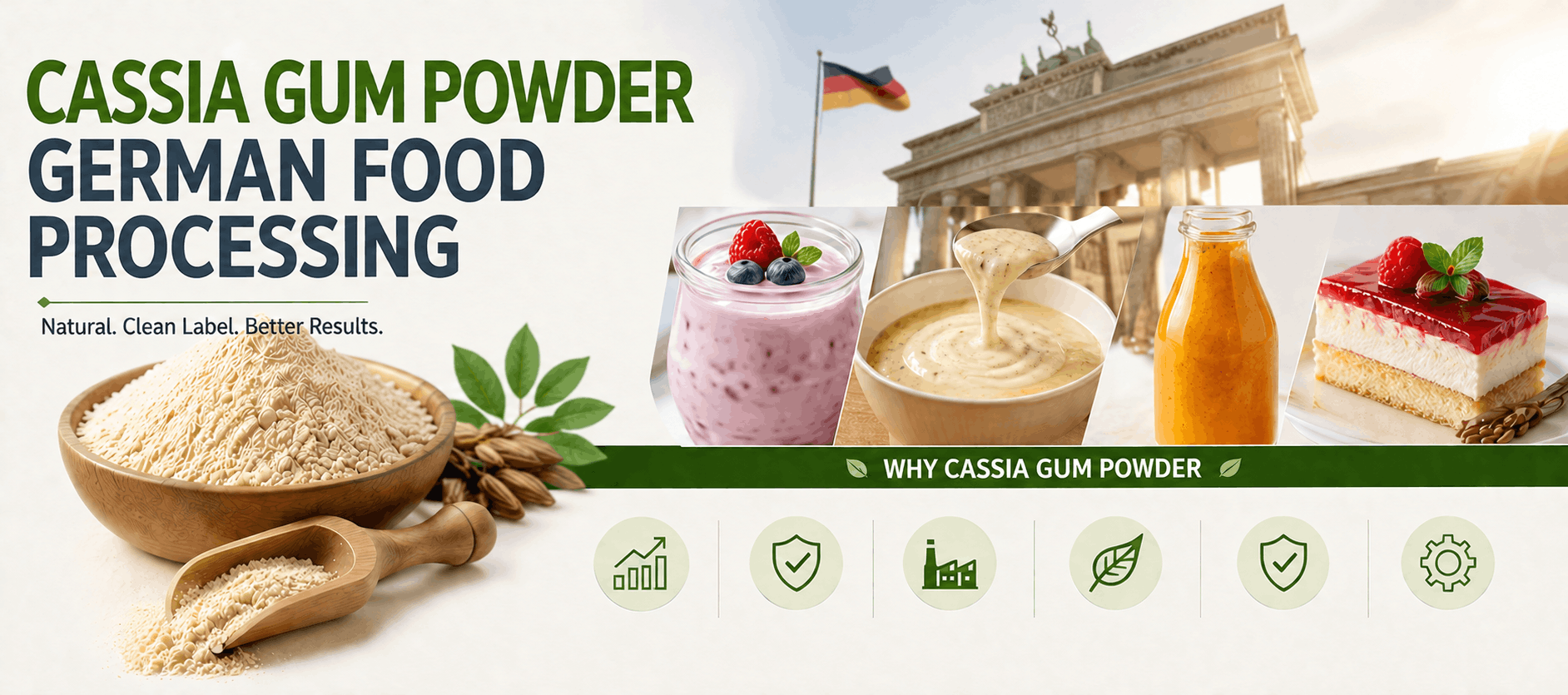
Cassia Gum Powder Demand in German Food Processing
In food manufacturing, cassia gum powder is used to improve texture and stability in dairy alternatives, sauces, processed meats and bakery products. German manufacturers often combine cassia gum powder with carrageenan or xanthan gum to achieve specific gel strength and mouthfeel targets.
The country’s strong pet food manufacturing base also drives demand, since cassia gum powder supports texture and moisture retention in wet and canned pet food formulations. Germany is home to several large pet food producers that supply products across the European market, which adds meaningful volume to overall cassia gum powder consumption.
Bakery and confectionery producers in Germany also use cassia gum powder to extend shelf life and improve moisture retention in products that need to remain fresh through longer retail distribution cycles.
Our Other Product
Guar Gum PowderGrowing Use of Cassia Gum Powder in Personal Care and Cosmetics
Beyond food, German cosmetic and personal care manufacturers increasingly use cassia gum powder as a natural thickener and conditioning agent in hair care and skin care formulations. Its plant based origin aligns with the clean label and naturals positioning common in the German personal care sector.
Formulators working on shampoo, conditioner and styling products often select cassia gum powder specifically for its conditioning feel on hair, which is different from the purely thickening function it serves in food applications.
Cassia Gum Powder Compared to Other Hydrocolloids Used in Germany
German formulators frequently choose between cassia gum powder, guar gum and locust bean gum depending on the specific texture and cost target of a formulation. Cassia gum powder is often selected as a more cost-effective alternative to locust bean gum while still offering a comparable galactomannan structure.
Guar gum remains popular for applications needing rapid hydration, while cassia gum powder is often preferred where a cleaner label claim or a specific synergy with carrageenan is required. Many formulations in Germany use a blend of these hydrocolloids rather than relying on a single ingredient.
Logistics and Import Considerations for German Buyers
German importers typically bring in cassia gum powder through major European ports, with Hamburg and Rotterdam serving as common entry points before onward distribution across the country. Buyers should confirm that shipping documentation, phytosanitary certificates and customs paperwork are prepared correctly to avoid delays at the border.
Working with an experienced cassia gum exporter reduces the administrative burden here, since an established supplier will already be familiar with the documentation German customs and food safety authorities expect to see.
Quick Response Guaranteed
Contact Us!
About Avlast Hydrocolloids
Avlast Hydrocolloids is a manufacturer, processor and exporter of cassia gum powder, cassia tora splits and guar gum products, based in Ahmedabad, India, active in the hydrocolloids industry since 2006. The company currently supplies customers in more than 30 countries, including buyers across the European Union.
Avlast Hydrocolloids exports refined and purified cassia gum powder to buyers across Europe, supported by documentation aligned with EU food additive and cosmetic ingredient requirements, including E427 compliance statements and batch specific certificates of analysis.
German importers typically evaluate a supplier on consistency of viscosity, transparency of testing data and reliability of shipment timelines, all areas where an established manufacturer with export experience has a clear advantage, and where Avlast Hydrocolloids works directly with customers to confirm specifications before shipment.
Conclusion
Germany’s combination of strict food safety standards, clear E427 regulatory status and growing personal care demand makes it one of the more attractive long term markets for cassia gum powder exporters. Suppliers that can consistently document purity, regulatory compliance and batch quality are best positioned to serve German food, pet food and cosmetic manufacturers.
Frequently Asked Questions
Is cassia gum approved for use in Germany and the wider EU?
Yes. Cassia gum is approved across the European Union as the food additive E427, subject to defined purity standards covering moisture, ash content and heavy metals. This approval applies uniformly across all EU member states, including Germany, so a cassia gum powder that meets E427 requirements can generally be used across the entire European market without separate national approval.
What industries in Germany use cassia gum powder the most?
Food processing, pet food manufacturing and personal care are the three main industries driving cassia gum powder demand in Germany. Within food processing specifically, dairy alternatives, sauces, processed meats and bakery products represent the largest application areas, while pet food demand is concentrated in wet and canned formulations.
Does cassia gum powder need to be labeled on German food products?
Yes. When used as an additive, cassia gum must appear on the ingredient list, typically listed as E427 or cassia gum, depending on the labeling convention chosen by the manufacturer. German consumers and retailers are generally attentive to ingredient transparency, so accurate labeling matters for market acceptance.
Can cassia gum powder be used in German pet food products?
Yes, cassia gum powder is used in wet and canned pet food formulations for texture and moisture retention, provided it meets the required purity criteria under EU regulations. Germany has a substantial domestic pet food manufacturing sector, which contributes meaningfully to overall national demand for cassia gum powder.
Why do German buyers prefer certified cassia gum suppliers?
Germany's food safety standards are strict, so buyers need suppliers who can provide consistent documentation, including certificates of analysis, compliance statements and traceability records. German procurement teams typically build long term relationships with suppliers who can demonstrate this documentation reliably across multiple shipments rather than a single batch.
Where does most of the cassia gum powder used in Germany come from?
A large share of cassia gum powder used in Germany and across Europe is sourced from India, where cassia tora is grown and processed at scale by established manufacturers. India's combination of raw material availability and processing expertise makes it a natural sourcing base for European buyers.
How does cassia gum powder compare in cost to locust bean gum in German formulations?
Cassia gum powder is generally more cost effective than locust bean gum while offering a broadly similar galactomannan structure, which is one reason German formulators increasingly consider it as a substitute in certain applications. The exact cost difference depends on grade, purity level and current market pricing for both ingredients.
What documentation should a German importer request before the first shipment?
At minimum, request a certificate of analysis, an E427 compliance statement, Kosher or Halal certification if relevant to the end product, and any food safety management certification the manufacturer holds, such as ISO 22000 or FSSC 22000. Reviewing these documents before the first order helps avoid compliance issues later in the supply chain.
Share At:




Listen to the Audio Version
0:00 /
0:00