
Cassia Gum Powder Export to Japan: Food Processing and Precision Manufacturing Demand
AI Summary
Japan is among the top global markets for cassia gum powder, with demand driven by a food processing industry known for technical precision and strict consistency requirements. Japanese buyers typically prioritize documented viscosity stability and batch to batch consistency over price alone, favoring certified manufacturers such as Avlast Hydrocolloids that can supply detailed technical data with every shipment.
Japan’s food and manufacturing culture places unusually high value on process precision, which shapes how Japanese buyers evaluate and select a cassia gum powder supplier compared to buyers in other major markets.
Why Japan Is a High Value Market for Cassia Gum Powder
Japanese food manufacturers are known internationally for exacting quality control and a strong preference for ingredients that perform identically batch after batch. Cassia gum powder fits into this demand as a natural thickener and stabilizer used across dairy, confectionery and processed food applications.
Industry data consistently places Japan among the leading global markets for cassia gum powder, alongside China, Germany, India and the United States, reflecting the scale and maturity of Japanese food processing demand.
Japanese Food Processing Standards and Precision Manufacturing Culture
Japanese food manufacturers generally operate with narrower acceptable tolerance ranges for ingredient performance compared to many other markets. A cassia gum powder batch that hydrates slightly differently from the previous shipment can disrupt a finely tuned production process, so consistency is often valued above marginal cost savings.
This precision focused culture extends to documentation expectations as well. Japanese buyers frequently request detailed technical data sheets covering viscosity curves, hydration time and particle size distribution, rather than a brief general specification.
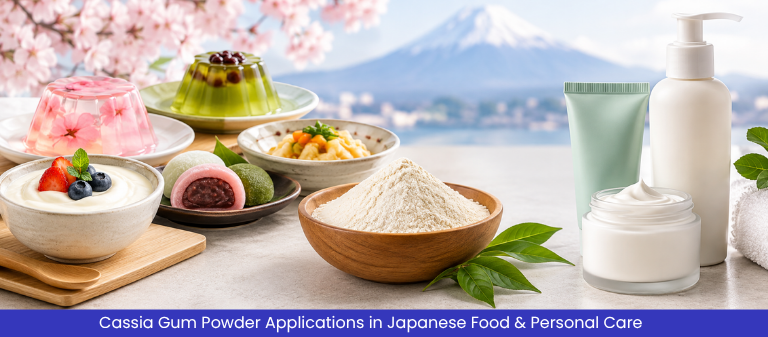
Cassia Gum Powder Applications in Japanese Food Products
In Japan, cassia gum powder is commonly used in dairy desserts, jelly style confectionery and processed food products where a smooth, stable gel texture is required. It is also used in combination with carrageenan in some formulations to achieve specific textural targets common in Japanese dessert products.
Beyond food, Japanese manufacturers in the personal care sector have shown growing interest in plant based thickeners such as cassia gum powder, consistent with a broader regional shift toward natural ingredient sourcing.
Regulatory Status of Cassia Gum Powder in Japan
Cassia gum is approved for food and feed use in Japan, allowing its application across food processing and animal feed formulations. Exporters should confirm current documentation requirements with their buyer, since import procedures can include specific labeling and testing paperwork beyond the core regulatory approval.
What Japanese Buyers Prioritize in a Cassia Gum Powder Supplier
| Priority | Why It Matters to Japanese Buyers | Supplier Requirement |
| Batch to batch consistency | Production lines are tuned to narrow tolerance ranges | Documented viscosity range for every shipment |
| Detailed technical documentation | Supports precise formulation planning | Full data sheet, not a brief specification |
| Reliable delivery timelines | Japanese manufacturing runs on tight schedules | Confirmed shipping and lead time commitments |
| Long term supplier relationships | Trust built over repeated verified shipments matters more than one time pricing | Consistent quality across multiple orders |
Shipping and Logistics for Cassia Gum Powder Exports to Japan
Cassia gum powder shipments to Japan typically move through major ports such as Yokohama, Kobe or Tokyo, with import documentation and food safety paperwork prepared according to Japanese customs and food import regulations.
Because Japanese buyers often plan production schedules well in advance, exporters who can commit to reliable lead times and communicate proactively about any shipping delays tend to build stronger long term relationships in this market.
Common Mistakes Exporters Make When Entering the Japanese Market
One frequent mistake new exporters make is treating a Japanese inquiry the same as any other export lead, responding with a generic specification sheet rather than the detailed technical documentation Japanese buyers typically expect from the very first interaction.
Another common misstep is underestimating the importance of delivery timeline reliability. Missing a committed shipping date, even once, can significantly damage trust with a Japanese buyer, since production schedules in Japanese manufacturing are often planned with limited flexibility for supply disruption.
Exporters who take time upfront to understand a specific buyer’s technical requirements and communicate proactively about any potential issue, rather than waiting to be asked, tend to avoid these early missteps and build stronger relationships more quickly.
Building Long Term Trust with Japanese Cassia Gum Powder Buyers
Japanese business relationships in manufacturing tend to develop gradually, often starting with small trial orders before moving to larger, ongoing supply agreements. Suppliers who treat this initial phase seriously, responding promptly to technical questions and delivering exactly what was specified, tend to see that early trust translate into long term repeat business.
Communication style also matters in this market. Japanese buyers generally appreciate clear, specific answers to technical questions rather than general marketing language, and they often expect a supplier to proactively flag any potential issue with a shipment rather than waiting to be asked.
Once trust is established, Japanese buyers frequently become long term, stable customers, since the cost and effort of qualifying a new supplier is significant within their own internal processes. This makes the Japanese market particularly rewarding for exporters willing to invest in the relationship early on.
 Call Now!
About Avlast Hydrocolloids
Avlast Hydrocolloids is a manufacturer, processor and exporter of cassia gum powder, cassia tora splits and related hydrocolloid products, based in Ahmedabad, India, active in the industry since 2006 and currently supplying customers across more than 30 countries.
For buyers in Japan, Avlast Hydrocolloids provides detailed batch specific technical documentation, including viscosity data and particle size information, supporting the precision and consistency expectations common among Japanese food manufacturers.
The company works directly with international buyers to confirm specifications and shipping timelines before an order is finalized, helping Japanese manufacturers plan production schedules with confidence.
Conclusion
Japan’s food processing industry rewards suppliers who can consistently deliver precise, well documented cassia gum powder rather than the lowest priced option alone. Exporters who invest in detailed technical documentation and reliable delivery timelines are best positioned to build lasting relationships with Japanese food and personal care manufacturers.
Frequently Asked Questions
Why do Japanese buyers place so much emphasis on cassia gum powder consistency?
Japanese food manufacturers typically operate with narrow acceptable tolerance ranges for ingredient performance, since their production processes are finely tuned. Even small batch to batch variation in cassia gum powder viscosity or hydration behavior can disrupt this precision, making consistency a higher priority than marginal cost differences.
Is cassia gum powder approved for use in Japan?
Yes, cassia gum is approved for food and feed use in Japan, covering applications in food processing and animal feed formulations. Exporters should still confirm current import documentation requirements directly with their buyer, since specific paperwork can vary.
What food applications use cassia gum powder most in Japan?
Dairy desserts, jelly style confectionery and various processed food products commonly use cassia gum powder in Japan, often in combination with carrageenan to achieve specific textural results favored in Japanese dessert formulations.
What documentation do Japanese buyers typically expect from a cassia gum powder supplier?
Japanese buyers generally request detailed technical data sheets covering viscosity curves, hydration time and particle size distribution, rather than a brief general specification. This level of documentation supports the precise formulation planning common in Japanese food manufacturing.
Which ports are commonly used for cassia gum powder shipments to Japan?
Major Japanese ports such as Yokohama, Kobe and Tokyo commonly receive cassia gum powder shipments, with import documentation and food safety paperwork prepared according to Japanese customs and food import regulations.
Does cassia gum powder pricing in Japan differ from other markets?
Japanese buyers often prioritize consistency and documented quality over the lowest available price, which can mean successful suppliers in this market compete more on reliability and technical support than on price alone compared to some other regions.
Is Japan a growing or stable market for cassia gum powder?
Japan is generally considered a mature, stable market for cassia gum powder rather than a fast growing one, reflecting its already well established food processing industry and long standing use of hydrocolloid ingredients.
What should a new exporter know before targeting the Japanese cassia gum powder market?
New exporters should prepare to provide detailed, batch specific technical documentation from the outset, commit to reliable delivery timelines, and expect a longer relationship building process compared to some other export markets, since Japanese buyers typically value proven consistency over multiple orders before committing to larger volumes.
How long does it typically take to build a stable supply relationship with a Japanese buyer?
It varies, but Japanese buyers commonly start with smaller trial orders before committing to larger, ongoing agreements, since internally qualifying a new supplier takes time and effort on their side. Suppliers who respond promptly and consistently meet specifications during this trial period tend to progress toward stable, long term business more quickly.
What is the most common early mistake exporters make when approaching Japanese buyers?
Responding with a generic specification sheet instead of detailed, batch specific technical data is one of the most common early mistakes, since Japanese buyers typically expect thorough documentation from the very first interaction rather than at a later stage of the relationship.