
Cassia Tora Seeds Export to Nigeria and West Africa: Tafasa Demand Explained
AI Summary
Cassia tora seeds, known locally as tafasa in Hausa, see strong and consistent demand across Nigeria and wider West Africa for traditional tea preparation, herbal remedies and eye care use. Exporters supplying this market need cassia tora seeds that meet consistent grading and cleanliness standards, since buyers in the region typically source directly from established processors such as Avlast Hydrocolloids rather than fragmented local traders.
Nigeria and the surrounding Hausa speaking region represent one of the more distinct and steady export markets for cassia tora seeds, shaped by long standing traditional use rather than industrial food processing alone. Understanding this market means understanding both the local naming and the specific way the seed is used day to day.
Why Nigeria and West Africa Are Key Markets for Cassia Tora Seeds
Cassia tora has been used in traditional West African households for generations, most commonly prepared as a roasted seed tea. This long standing familiarity with the plant creates a stable, recurring demand pattern that differs from the industrial food and pet food demand seen in markets like Germany or the Netherlands.
Search interest for the seed under its Hausa name confirms this demand is real and ongoing, with people regularly searching for the seed, its preparation methods and its traditional benefits across Nigeria and neighboring countries.
 Call Us Now!
Understanding Tafasa: The Hausa Name for Cassia Tora Seeds
Tafasa is the Hausa name widely used across Nigeria and parts of Niger, Chad and Ghana for cassia tora seeds. Related terms such as yayan tafasa and ganyen tafasa refer to the fruit and leaf of the plant respectively, reflecting how thoroughly the plant is used beyond just the seed.
For exporters and content teams targeting this market, using the correct local terminology alongside the botanical name cassia tora matters, since many buyers search using the Hausa name rather than the English or scientific term.
Traditional and Modern Uses of Cassia Tora Seeds in West Africa
Cassia tora seeds serve multiple purposes across West African households and small scale herbal trade.
- Roasted seed tea: the most common preparation, made by roasting and steeping the seeds, consumed as a daily herbal drink.
- Traditional eye care remedies: cassia tora seeds have a long history of use in traditional preparations aimed at supporting eye comfort and health.
- Digestive support: seed preparations are commonly used within traditional medicine practices to support digestion.
- Herbal market trade: cassia tora seeds are sold in bulk through local herbal markets across Nigeria and neighboring countries, supporting a wide small trader network.
- Agricultural and soil use: in some rural areas, cassia tora is also recognized for its role in soil cover and traditional farming practices.
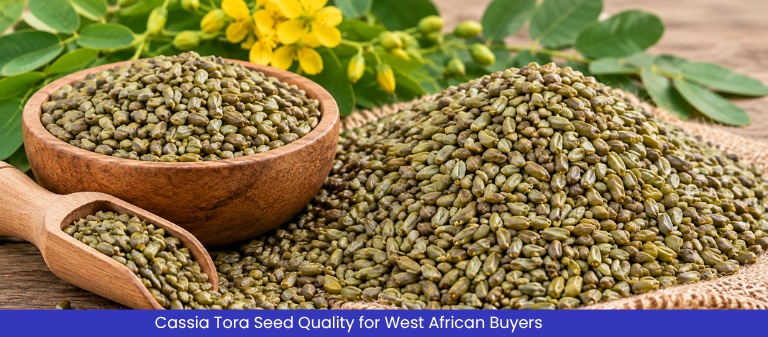
Cassia Tora Seed Quality Requirements for West African Buyers
Buyers sourcing cassia tora seeds for the West African herbal and tea market typically look for whole, clean, well dried seeds with minimal foreign matter and consistent color. Since seeds are often prepared by roasting at the household or small trader level, uniform seed size also supports even roasting.
Exporters supplying this market should be able to confirm moisture content, cleanliness grade and packaging suited to long distance shipping, since the product often travels through multiple trading points before reaching the final household buyer.
Common Local Names for Cassia Tora Across West Africa
| Region or Language | Common Local Name | Part of Plant Referenced |
| Hausa (Nigeria, Niger) | Tafasa | Seed |
| Hausa (Nigeria, Niger) | Yayan tafasa | Fruit or pod |
| Hausa (Nigeria, Niger) | Ganyen tafasa | Leaf |
| English or botanical | Cassia tora, sickle senna | Whole plant and seed |
Exporting Cassia Tora Seeds from India to Nigeria and West Africa
India remains a major producing region for cassia tora seeds, with established processing and grading infrastructure suited to bulk export. Shipments to Nigeria typically move through major West African ports such as Lagos, with onward distribution through regional trading networks.
Exporters working with this market benefit from clear communication using both the Hausa and botanical names of the product, along with reliable, consistent grading that supports trust with distributors who serve smaller local herbal traders.
Quality Control Checks Buyers Should Request Before Shipment
Distributors buying cassia tora seeds for the West African herbal market should request confirmation of moisture content and a cleanliness grade before a shipment is finalized, since these two factors most directly affect how well the seeds store and roast once they reach local traders.
A simple visual sample review, checking for consistent seed color and minimal broken or damaged seeds, can also help confirm quality before a larger order is placed, particularly for buyers working with a new supplier for the first time.
Packaging and Shipment Practices for Cassia Tora Seed Exports
Cassia tora seeds destined for West Africa are typically packed in multi layer bags designed to protect against moisture during long sea voyages, since the shipping route from India to West African ports can take several weeks depending on the specific vessel schedule and transshipment points involved.
Exporters familiar with this trade route generally recommend consistent bag weights suited to local distribution practices, since seeds are often broken down from larger shipments into smaller quantities as they move through regional trading networks before reaching individual herbal traders and households.
Clear, durable labeling that includes both the botanical name and, where possible, the local Hausa name helps reduce confusion further down the distribution chain, particularly once the product changes hands multiple times between the port of entry and the final point of sale.
 Email Us
About Avlast Hydrocolloids
Avlast Hydrocolloids is a manufacturer, processor and exporter of cassia tora seeds, cassia tora splits, cassia tora meal and cassia gum powder, based in Ahmedabad, India. The company has operated in the hydrocolloids and cassia processing industry since 2006 and currently supplies buyers across more than 30 countries.
Avlast Hydrocolloids supplies graded, clean cassia tora seeds suited to the herbal and traditional use market, along with documentation confirming moisture content, cleanliness grade and packaging specification for buyers across Nigeria and wider West Africa.
The company works directly with importers and distributors to confirm quantity, packaging and shipping requirements before finalizing an order, supporting consistent supply for buyers serving the regional herbal trade.
Conclusion
Nigeria and the wider West African region represent a distinct and consistent export market for cassia tora seeds, rooted in generations of traditional use rather than industrial demand alone. Exporters who understand local terminology, prioritize consistent seed quality and maintain reliable shipping arrangements are well positioned to serve this steady, recurring market.
Frequently Asked Questions
What is tafasa and how does it relate to cassia tora seeds?
Tafasa is the Hausa name used across Nigeria and neighboring countries for cassia tora seeds. It refers specifically to the seed, while related terms such as yayan tafasa and ganyen tafasa refer to the fruit and leaf of the same plant respectively.
Why is there strong demand for cassia tora seeds in Nigeria?
Cassia tora seeds have been used traditionally across Nigeria and West Africa for generations, most commonly prepared as a roasted seed tea and used in traditional herbal remedies. This long standing cultural familiarity creates steady, recurring demand distinct from industrial food processing markets.
How are cassia tora seeds traditionally prepared in West Africa?
The most common preparation involves roasting the seeds and steeping them to make a daily herbal tea. The seeds are also used in various traditional remedy preparations passed down through households and local herbal practitioners.
What quality standards matter most to West African cassia tora seed buyers?
Buyers typically prioritize whole, clean, well dried seeds with minimal foreign matter and consistent size, since uniform seeds support even roasting at the household and small trader level. Moisture content and cleanliness grading are the two most commonly requested specifications.
Which ports are commonly used to export cassia tora seeds to Nigeria?
Lagos is one of the major ports used for cassia tora seed shipments into Nigeria, with onward distribution through regional trading networks reaching Niger, Chad and other neighboring countries where the Hausa speaking population is significant.
Is cassia tora the same plant referred to as sickle senna?
Yes, sickle senna is one of the common English names for cassia tora, alongside various regional names used across different countries and language groups where the plant grows and is traditionally used.
Do exporters need to use local names like tafasa in addition to the botanical name?
It helps significantly. Many buyers and distributors in the region search for and refer to the product using the Hausa name tafasa rather than the botanical or English name, so using both terms together improves clarity and trust with regional trading partners.
Can cassia tora seeds be sourced in bulk for export to multiple West African countries?
Yes, established exporters can supply graded cassia tora seeds in bulk quantities suited to distribution across Nigeria and neighboring countries, provided packaging and shipping arrangements are confirmed in advance to support the onward regional trading network.
How is cassia tora seed packaging different for West African export compared to other markets?
Packaging generally emphasizes moisture protection for long sea voyages and consistent bag weights suited to how the product is broken down and redistributed through regional trading networks after arrival, which can differ from packaging used for industrial buyers in other markets who take full container loads directly.