
Read Our Article
The Rising Demand for Guar Gum in the United States: Market Insights & ApplicationsGuar Gum Powder Market in Thailand: Trends and Applications in Cosmetics and Pharmaceuticals
AI Summary
Thailand has become a major hub for guar gum powder in Southeast Asia, driven by its expanding personal care, pharmaceutical, and industrial sectors. Manufacturers in centers like Bangkok and Chonburi rely on high-quality, certified grades-often sourced from India-for applications ranging from tablet binding and controlled-release medicine to enhancing the texture of cosmetics in humid climates. Beyond traditional hubs, emerging markets in Chiang Mai and Phuket are adopting the ingredient for organic skincare and hospitality-branded products. As Thailand strengthens its position as a regional manufacturing leader, the demand for versatile, natural-origin thickening agents like guar gum is projected to see sustained growth across both specialized and traditional industries.
Guar Gum Powder in Thailand: Applications & Market Demand
Thailand has steadily emerged as one of the key consuming markets for guar gum powder across Southeast Asia. As manufacturing and processing industries in the country continue to expand, demand for functional ingredients derived from natural sources has grown accordingly. Guar gum, sourced primarily from the endosperm of the guar plant, is now an essential raw material across multiple industrial sectors in Thailand. From cosmetic formulation labs in Bangkok to pharmaceutical production units in Chonburi, the ingredient is being sourced by manufacturers who rely on stable and consistent supply chains, often tracing back to guar gum exporters in India.
Email Us for a Quick Response
 Email Now
Guar Gum Powder: Market Entry and Growing Demand in Thailand
The entry of guar gum powder into Thailand’s ingredient market has been closely tied to the country’s growing personal care and pharmaceutical manufacturing base. With Bangkok serving as the commercial and industrial hub, importers and raw material distributors in the city have established strong sourcing relationships with guar gum manufacturers located primarily in the Rajasthan and Gujarat regions of India. These connections have allowed Thai producers to access high-quality guar powder at competitive rates, enabling them to develop formulations that meet both local and international standards. As domestic consumption scales up, the role of the guar gum supplier has become increasingly important in maintaining uninterrupted supply to downstream industries.
Guar Gum in Cosmetics: Applications across Thai Beauty Manufacturing Centres
The use of guar gum in Thailand’s cosmetic sector is most prominent in cities such as Bangkok, Samut Prakan and Pathum Thani, where a cluster of personal care product manufacturers operate large-scale processing facilities. In these locations, the ingredient is incorporated into shampoos, conditioners, lotions and facial creams primarily for its rheological and film-forming properties. Industrial guar gum powder, processed to specific viscosity grades, is often preferred in these settings due to its compatibility with surfactant systems and emulsions commonly used in Thai cosmetic formulations. Formulators in these cities rely on guar gum application data provided by suppliers to optimize product performance across different climate conditions, including Thailand’s typically high humidity environment.
Guar Gum Manufacturing Standards and Sourcing Preferences in Chonburi and Rayong
Industrial zones in Chonburi and Rayong, which are part of Thailand’s Eastern Economic Corridor, house a significant number of chemical and specialty ingredient processing companies. These facilities have integrated guar gum into its production workflows as a texturizing, thickening and binding agent. The standards expected from guar gum manufacturing processes supplying these zones are stringent, including compliance with food-grade or pharmaceutical-grade specifications where applicable. Buyers in this region frequently evaluate guar gum suppliers on the basis of consistency in particle size distribution, moisture content and microbial load. Guar gum refined splits, the intermediate stage of processing before the final powder form, are also sourced by certain facilities that carry out in-house processing as part of their vertically integrated manufacturing model.
Guar Gum in Pharmaceuticals: Regulatory Landscape and Usage Patterns in Thailand
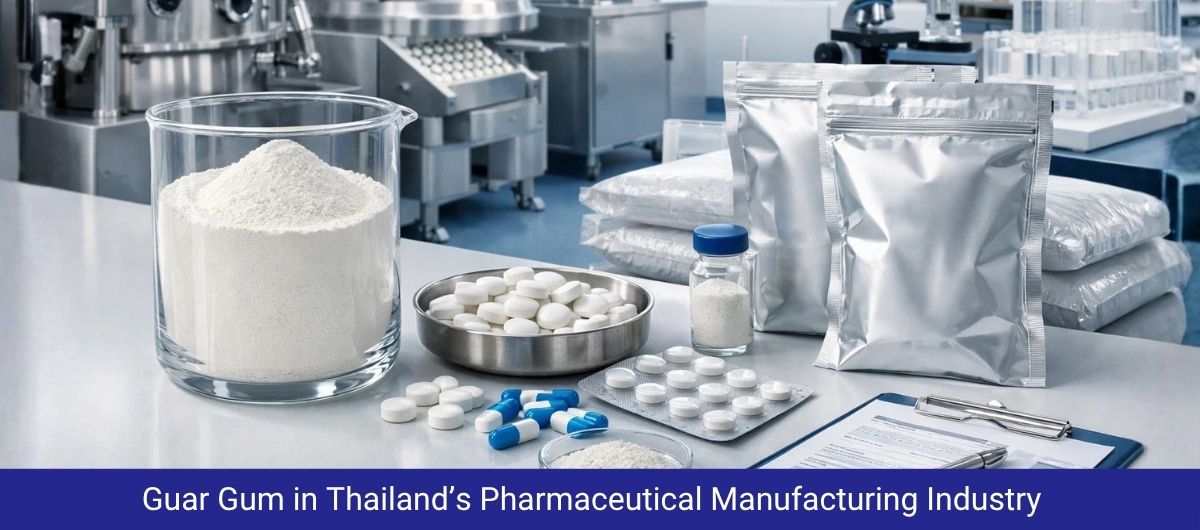
Thailand’s pharmaceutical manufacturing industry, centered in Bangkok and the surrounding provinces of Nonthaburi and Pathum Thani, has increasingly incorporated guar powder into oral dosage formulations. Its role as a binder, disintegrant and controlled-release matrix material has made it a reliable excipient in tablet and capsule manufacturing. The Thai Food and Drug Administration (FDA) guidelines for excipient usage align with international pharmacopeial standards, which means that pharmaceutical-grade guar gum sourced from certified guar gum manufacturers meets compliance requirements without extensive reformulation. As the country’s pharmaceutical export ambitions grow – particularly toward ASEAN markets – the demand for consistent, certified-grade guar powder is expected to rise in these production corridors.
Our Other Product
Cassia Tora SeedsGuar Gum Export Price Dynamics and Procurement Strategies in Thai Markets
Procurement teams in Thailand closely track the guar gum export price from India, which remains the world’s dominant producer and exporter of the ingredient. Fluctuations in guar gum powder price are tied to monsoon performance in India’s primary cultivation belts, particularly in Rajasthan. Thai buyers, especially those in Bangkok-based trading firms that supply both domestic manufacturers and regional clients, have developed multi-supplier strategies to manage price volatility. Working with multiple guar gum exporters allows buyers to negotiate better terms and hedge against supply disruptions. The guar gum price observed from Indian ports is frequently referenced by Thai importers to benchmark landed costs after freight, duties and handling are factored in.
Guar Gum in India: Production Infrastructure Supporting Thai Import Channels
The origin of most guar gum traded into Thailand is rooted in guar gum in India – specifically in the processing clusters in Rajasthan. These regions are home to hundreds of guar gum manufacturers who process raw guar seeds into guar gum split and further refine them into food, industrial and pharma-grade powders. Guar gum refined splits are early-stage products that serve as the base material for final powder production. Thai importers dealing with pharmaceutical-grade requirements often establish direct vendor relationships with processing units in India that have international certifications such as ISO, GMP and FSSC 22000. This directness in sourcing has helped maintain supply chain transparency and reduce intermediary markups, making the guar gum application value chain more cost-efficient for Thai end-users.
Industrial Guar Gum Powder: Expansion into Non-Traditional Sectors across Phuket and Chiang Mai
While Bangkok, Chonburi and Rayong lead in industrial consumption, emerging markets for industrial guar gum powder are developing in cities such as Chiang Mai and Phuket. In Chiang Mai, a growing community of natural and organic product manufacturers – ranging from herbal cosmetics to traditional Thai medicine preparations – have begun incorporating guar powder into its formulations as a plant-derived thickening agent. The preference for natural-origin excipients in this market aligns well with the properties of guar gum. In Phuket, the hospitality and wellness industry has driven demand for spa and skincare product manufacturers who source guar gum for gel-based and cream formulations used in resort-branded personal care lines. These niche but growing pockets of demand are reshaping the geographic spread of guar gum consumption within Thailand.
Speak with an Expert
 Call Us Now!
Guar Gum Application Trends and Future Outlook for Thailand
The guar gum application landscape in Thailand is projected to diversify further as the country invests in specialty chemical and nutraceutical manufacturing. Several Thai companies are exploring the use of guar powder in encapsulation systems for dietary supplements, a segment where the ingredient’s film-forming and binding characteristics provide functional utility. Additionally, the textile processing industry in the northern and central regions of Thailand has historically used guar-based sizing agents and this sector continues to be a steady consumer of industrial-grade guar. With Thailand positioned as a regional manufacturing hub for Southeast Asian markets, the volume of guar gum imported annually is expected to increase, reinforcing the importance of reliable sourcing channels from established guar gum exporters.
Our Other Product
Cassia Tora SplitsConclusion
Thailand’s consumption of guar gum powder reflects the country’s broader industrial growth across cosmetics, pharmaceuticals and specialty manufacturing. Cities such as Bangkok, Chonburi, Chiang Mai and Phuket represent both established and emerging demand centers for this versatile ingredient. The supply pipeline, largely driven by guar gum in India through certified guar gum manufacturers and exporters, continues to support Thai industries with consistent quality and competitive pricing. As guar gum application areas expand beyond traditional uses, procurement professionals and formulators in Thailand will remain closely tied to developments in Indian production and global export pricing. The market trajectory indicates sustained growth, making guar gum a strategically important raw material in Thailand’s evolving industrial landscape.
