
Hydrocolloids for Food Manufacturers: Guar Gum, Cassia Gum and Locust Bean Gum Compared
AI Summary
- Guar gum, cassia gum, locust bean gum and tara gum are galactomannan seed gums whose galactose content controls solubility and gelling.
- Guar gum dissolves in cold water, while cassia gum powder is soluble only in hot water and locust bean gum needs heating.
- Locust bean gum, cassia gum and tara gum bind to kappa carrageenan, while guar gum does not.
- The right gum depends on process temperature, texture target and the regulatory code in the target market.
- Avlast Hydrocolloids exports guar and cassia gum powder in bulk to more than 30 countries.
Food manufacturers choose from a wide range of hydrocolloids to control viscosity, gel strength, texture and stability. Seed gums are among the most widely used because they work at low dosage and come from plant sources.
This guide compares four related gums so formulators and buyers can see which one fits a given process.
What Hydrocolloids Do in Food Processing: Food Hydrocolloids Explained
Hydrocolloids are substances that disperse in water to thicken, gel or stabilise a food. They keep particles suspended, hold water in place, limit ice crystal growth and give products a smooth mouthfeel.
Seed gums, also called galactomannans, form a family within this group. They are used in dairy desserts, sauces, noodles, beverages, bakery fillings and pet food.
Choosing between them depends on process temperature, desired texture and the labelling rules of the target market.
 Email Us Now!
Galactomannans and Seed Gums Explained: Guar, Tara, Locust Bean and Cassia Gum
All four gums are polysaccharides with a mannose backbone and galactose side units. The ratio of mannose to galactose is about two to one in guar gum, three to one in tara gum, four to one in locust bean gum and at least five to one in cassia gum.
More galactose side units make the gum dissolve more easily in cold water. Fewer side units mean the molecules associate more strongly, so the gum needs heat to dissolve but can interact with other hydrocolloids to form gels.
This single structural difference explains most of the practical differences between the four gums.
Cold Water Guar Gum and Hot Water Cassia Gum Powder: Solubility Compared
Guar gum dissolves in cold water and builds viscosity quickly, which makes it convenient for cold process foods and for plants without heating equipment.
Locust bean gum needs heating to dissolve fully. Cassia gum powder is soluble only in hot water, so processors hydrate it with heat during cooking or pasteurisation. Tara gum sits between guar gum and locust bean gum in solubility.
Formulators should therefore match the gum to the process. A line with no heating step suits guar gum, while a line with a cooking stage can use cassia gum powder or locust bean gum.
| Gum | E Number | Mannose to Galactose Ratio | Water Solubility | Typical Role |
|---|---|---|---|---|
| Guar gum | E412 | About 2 to 1 | Dissolves in cold water | Fast thickening and stabilising, cold process use |
| Tara gum | E417 | About 3 to 1 | Between guar gum and locust bean gum | Works with kappa carrageenan |
| Locust bean gum | E410 | About 4 to 1 | Needs heating, soluble in hot water | Weak gels, synergy with xanthan and carrageenan |
| Cassia gum | E427 (E499 in pet food) | At least 5 to 1 | Soluble only in hot water | Gel support with carrageenan, wet pet food |
Hydrocolloid Gelling and Synergy: Which Gums Work With Carrageenan and Xanthan
Locust bean gum shows viscosity synergy with xanthan gum and binds to kappa carrageenan, strengthening the gel. Cassia gum and tara gum also bind to kappa carrageenan, while guar gum does not.
This is why guar gum is chosen mainly as a thickener, while cassia gum, tara gum and locust bean gum are chosen where a gel structure is needed.
In wet pet food, the European authorisation for cassia gum requires carrageenan to be used with it, which shows how closely the two ingredients are linked.
Guar Gum Powder in Food Processing: Fast Viscosity and Cold Process Use
Guar gum is valued for its high viscosity at low dosage and for dispersing in cold water. It carries the code E412 in the European Union.
Manufacturers use it in ice cream and frozen desserts, beverages, sauces, noodles and bakery products, where it improves body, holds water and stabilises texture.
Fast hydrating grades are available for processes that need viscosity quickly, such as instant noodle production.
Cassia Gum Powder in Food and Pet Food: Hot Water Hydration and Gel Support
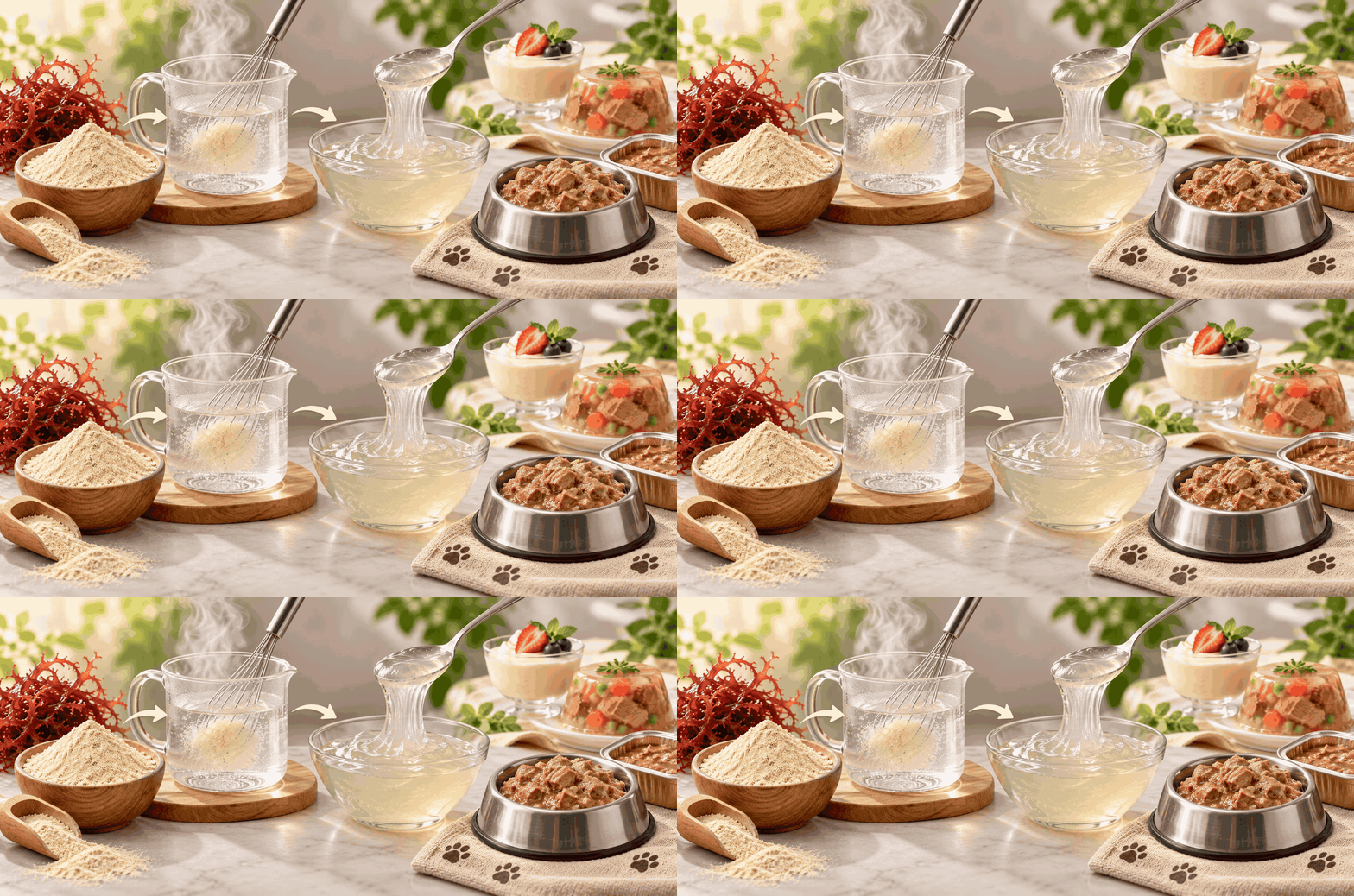
Cassia gum carries the code E427 in food and E499 in pet food. It is soluble only in hot water, so it is hydrated with heat and typically paired with carrageenan to give firm, elastic gels.
Wet pet food is its best known application. Food manufacturers also consider cassia gum powder where it is approved, and they check the permitted categories in their market.
Many formulators evaluate cassia gum as an alternative to locust bean gum because both are galactomannans that interact with carrageenan.
Locust Bean Gum and Tara Gum as Hydrocolloid Alternatives to Guar and Cassia Gum
Locust bean gum forms weak gels that do not reverse with heat, and it has poorer freeze thaw behaviour than guar gum. It is also known for limiting ice crystal growth, which is why it is common in frozen desserts.
Tara gum is a related galactomannan that interacts with carrageenan in a similar way, and formulators consider it when they want a different balance of solubility and gel behaviour.
Avlast Hydrocolloids supplies guar gum powder and cassia gum powder, which cover the cold water thickening and hot water gelling roles described in this guide.
How to Choose a Hydrocolloid or Seed Gum for Your Food Application
Start with the process. If there is no heating step, guar gum is the practical choice. If the product is cooked or retorted, cassia gum powder or locust bean gum become options.
Next consider the texture target. Thickening and body point toward guar gum, while elastic gels with carrageenan point toward cassia gum, tara gum or locust bean gum.
Finally check the regulatory code and permitted food category in the target market, and ask the supplier for a specification, certificate of analysis and hydration guidance.
Running Trials When Comparing or Combining Seed Gums
The most reliable way to compare seed gums is to test them in the actual recipe and process. Formulators should measure viscosity or gel strength at the real processing temperature, using the same dosage steps for each gum.
When combining gums, change one variable at a time, and record the hydration temperature, mixing time and order of addition. Because cassia gum powder is soluble only in hot water, the heating step needs to be built into each trial that includes it.
 Call Us Now!
About Avlast Hydrocolloids: Guar Gum Powder and Cassia Gum Powder Supplier
Avlast Hydrocolloids is a manufacturer, processor and exporter of guar gum powder, guar splits, guar meal, cassia gum powder, cassia tora splits and cassia tora meal, based in Ahmedabad, India. The company was founded in 2006 and currently exports to more than 30 countries.
Buyers can request technical data sheets and certificates of analysis for both guar gum powder and cassia gum powder, including clear hydration guidance for each. Avlast Hydrocolloids holds Kosher and Halal certificates, and its processing of cassia gum powder for food industries is certified under FSSC 22000.
The Avlast Hydrocolloids team supports formulators who are comparing seed gums, and it can arrange sample lots so that trials can be run before a bulk order.
Conclusion: Choosing Between Guar Gum, Cassia Gum and Locust Bean Gum
Guar gum, cassia gum, locust bean gum and tara gum are close relatives, but their galactose content gives each a distinct solubility and gelling profile. Formulators who match the gum to the process temperature, texture target and regulatory requirements will choose the right ingredient first time.
Frequently Asked Questions About Guar Gum, Cassia Gum and Locust Bean Gum
What is the main difference between guar gum and cassia gum?
Guar gum has more galactose side units and dissolves in cold water, while cassia gum has fewer and is soluble only in hot water. Guar gum is mainly a thickener, while cassia gum is used where gel structure is needed, often with carrageenan. These differences decide which gum suits a given process.
Why does cassia gum powder need hot water?
Cassia gum has a high mannose to galactose ratio, so its molecules associate strongly and do not separate in cold water. Heat is needed to hydrate the gum fully. For this reason cassia gum powder is described as soluble only in hot water.
Which seed gum dissolves in cold water?
Guar gum dissolves in cold water and develops viscosity quickly, which suits cold process foods. Tara gum sits between guar gum and locust bean gum in solubility. Locust bean gum and cassia gum powder need heat.
Which gums work with carrageenan?
Locust bean gum, cassia gum and tara gum all bind to kappa carrageenan and strengthen the gel. Guar gum does not interact with carrageenan in the same way. This is why guar is chosen mainly as a thickener.
What are the E numbers for these gums?
Guar gum is E412, locust bean gum is E410, tara gum is E417 and cassia gum is E427 in food. Cassia gum is coded E499 in pet food. Buyers should use the code that matches the intended use on their documents.
Can cassia gum replace locust bean gum?
In some formulations it can, since both are galactomannans that interact with carrageenan. The result depends on the recipe, process and texture target, so trials are needed. A supplier can provide samples and technical data to support testing.
Can guar gum and cassia gum be used together?
Formulators sometimes combine seed gums to balance viscosity and gel strength in a recipe. Because guar gum dissolves in cold water and cassia gum powder needs hot water, the process must suit both. Trials are the best way to confirm results.
Dhaval Patel is the CEO of Avlast Hydrocolloids, a manufacturer, supplier and exporter of hydrocolloid products based in Ahmedabad, India. Avlast Hydrocolloids specializes in Guar Gum and Cassia Gum products, serving customers across food, pet food, animal feed, pharmaceutical, personal care and various industrial applications.
With a strong focus on product quality, consistency and application-specific requirements, Avlast Hydrocolloids offers products including Guar Gum Powder, Fast Hydration Guar Gum Powder, Guar Refined Splits, Cassia Gum Powder, Cassia Tora Splits and other hydrocolloid ingredients. The company serves both domestic and international markets, with a focus on meeting industry-specific quality and performance requirements.
Through its industry-focused content, Avlast Hydrocolloids shares practical and informative insights about guar gum, cassia gum, hydrocolloids, their properties, applications, specifications and use across different industries. The content is intended to provide accurate and useful information for manufacturers, formulators, buyers, importers and other professionals looking to understand hydrocolloid ingredients and their applications.